
Sed Contra
A Publication of the Thomistic Institute
The Summa Illuminated: St. Thomas Aquinas’s Masterpiece as a Roadmap for the Beginner
9/18/26
To this day, I harbor a profound and abiding affection for the great indoors. Decades ago, long before the internet had reshaped the landscape of our daily lives, I lived in the countryside of Western Pennsylvania with my loving parents and four younger sisters. My sisters were delightfully energetic children; they were certainly not the sort to sit quietly sipping tea. Instead, they spent their days running through the open air, throwing rocks, and filling the woods with their shouts. I, however, was entirely out of place in the wilderness. I suffered from severe allergies that routinely made the outdoor air feel like an adversary, and so I sought refuge within the safe, quiet walls of our home.

Burnout Society
7/22/26
A few years ago, Yale professor William Deresiewicz warned that the nation’s top colleges were turning students into “zombies.” While many of his students were bright, thoughtful, and creative, most of them seemed all too content to color within the lines. Very few were passionate about ideas. Very few saw college as part of intellectual discovery. They all dressed as if they were ready for a job interview at a moment’s notice. They were driven, accomplished, talented, disciplined, successful, and capable. Yet, if you looked beneath their facade of seamless well-adjustment, what you found were toxic levels of fear, anxiety, emptiness, aimlessness, and isolation. Ultimately, the prospect of not being successful terrified and disoriented them.

The Science and Theology of Extraterrestrials
10/22/25
One of the great discoveries in the past two decades is that planets are common, very common. We have gone from only knowing the planets in our own solar system, to finding thousands around other stars, and in the process, discovered that close to all stars have planetary systems around them. In our galaxy, the Milky Way, there are around three hundred billion stars.

The Philosophy, Theology, and Psychology of Happiness
7/10/25
It is 2008, it is my 16th wedding anniversary, and I am walking into the National Shrine of the Immaculate Conception to pray for a miracle. I am about to turn in my letter of resignation from a dream job in Washington, DC. I am about to give up a forty percent raise, wonderful friends, and the best parish I have ever joined. So, I make my way past various side chapels until I find the statute of Our Lady of Sorrows. I kneel down. I am in tears. I pray for a last-minute miracle.

Balderdash: What It Is, Why We Tolerate It, and How We Can Reduce It
5/1/25
I fell in love with the notion of Balderdash several years ago when I came across an essay by Neil Postman entitled The Educationist as Painkiller. Postman’s argument runs something like this: If our goal is to increase intelligence, we ought to try to reduce our stupidity. Reducing stupidity ultimately requires reducing all of stupidity’s expressions—stupid thinking, stupid behaving, and stupid speaking...

Why the Demons Fell
2/11/25
Angels are worthy objects of contemplation, because they reveal both God’s intelligence and something of his plan of salvation at work in our midst. By comparison to the angels, the demons don’t afford us the same kind of contemplative insights, because their natures have been darkened. Whereas you can gaze upon the angels and never be satisfied with their luminosity, you don’t want to be sucked in to the demons’ obscurity. Certainly, we refer to the demons (as revealed by our faith), but then we use them to pivot to other anthropological insights and by extension, to insights about God himself...
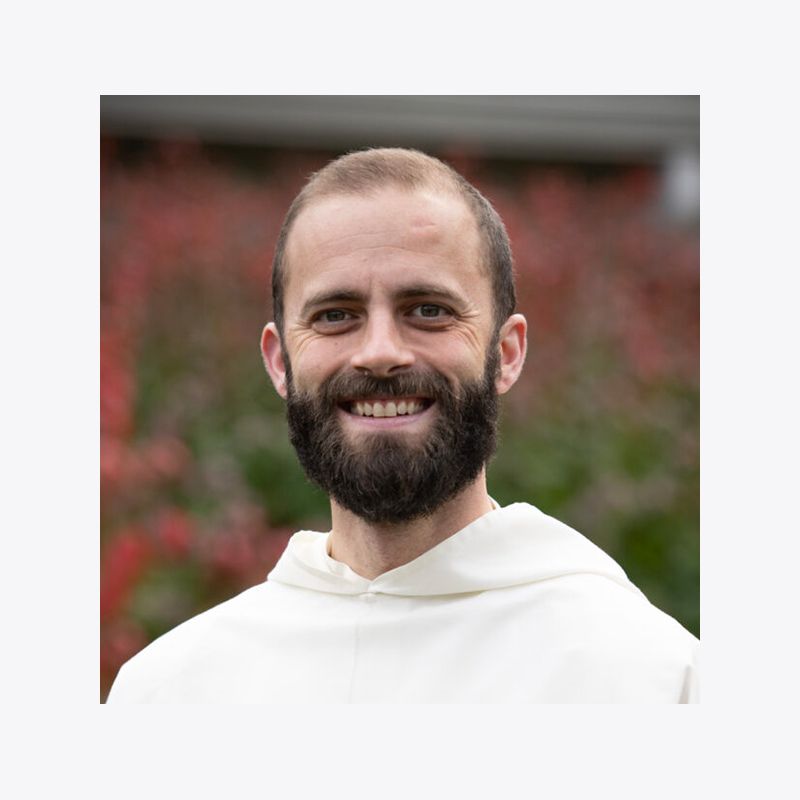
Moral Relativism and the Natural Law
12/17/25
I begin with these two sets of propositions. The first set consists of some moral rules, with which everyone is familiar.
•Love your neighbor as yourself.
•Thou shall not commit adultery.
•Do not intentionally kill the innocent.
•Do not take what is not yours without permission...

How is My iPhone Changing Me?: Neuroscience and Thomistic Psychology
10/1/24
Technology changes us. Electric light bulbs, and gas lamps before that; automobiles and gasoline-powered farm equipment; gunpowder and steam locomotion; clocks and the printing press; bronze and iron. These technologies took hold not only because they helped us to achieve what we wanted. They created opportunities for new things we hadn’t wanted before...